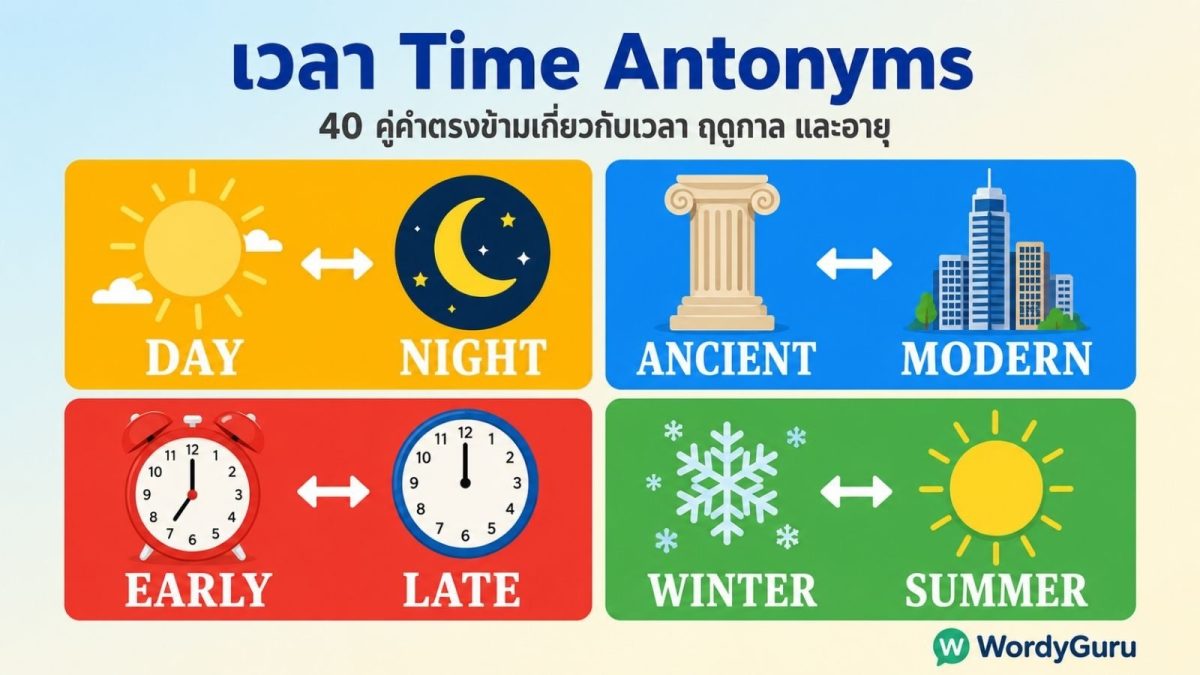
คำตรงข้ามภาษาอังกฤษหมวดเวลา Time Antonyms พร้อมตัวอย่าง
หน้านี้รวม คำตรงข้ามภาษาอังกฤษเกี่ยวกับเวลา 40 คู่ จัดหมวด 5 ประเภทย่อย ได้แก่ ช่วงเวลาในวันและสัปดาห์ ฤดูกาลและยุค ลำดับเหตุการณ์และช่วงเวลา ความถี่และระยะเวลา รวมถึงอายุและช่วงชีวิต พร้อมความหมายภาษาไทยและตัวอย่างประโยค ใช้บ่อยในการเล่าเหตุการณ์ การวางแผน และการเขียนเรียงความบรรยายอดีต-ปัจจุบัน-อนาคต
ต้องการดูคำตรงข้ามภาษาอังกฤษทั้งหมด? ไปที่ ตารางครบ A-Z (250 คู่) · ต้องการเรียนคำตรงข้ามเกี่ยวกับขนาด? ไปที่ หมวดขนาดและปริมาณ · สนใจคำกริยาเริ่ม-จบ? ไปที่ หมวดคำกริยา · ดูภาพรวมที่ หน้าหลัก Antonyms
⏰ หมวดช่วงเวลาในวันและสัปดาห์ (Time of Day and Week)
คำกลุ่มนี้บรรยายช่วงเวลาในแต่ละวัน วงจรกลางวัน-กลางคืน และเหตุการณ์ที่เกิดขึ้นในช่วงเวลาต่างๆ ใช้บ่อยในการเล่ากิจวัตรประจำวันและการนัดหมาย
| Word | Antonym | ความหมาย / ตัวอย่าง |
|---|---|---|
| day / กลางวัน | night / กลางคืน | Day brings light; night brings rest. |
| morning / เช้า | evening / เย็น | I exercise in the morning, read in the evening. |
| dawn / รุ่งอรุณ | dusk / โพล้เพล้ | Birds sing at dawn and again at dusk. |
| sunrise / พระอาทิตย์ขึ้น | sunset / พระอาทิตย์ตก | Photographers love both sunrise and sunset. |
| AM / ก่อนเที่ยง | PM / หลังเที่ยง | My alarm rings at 6 AM; my class ends at 6 PM. |
| weekday / วันธรรมดา | weekend / วันหยุด | Weekdays for work, weekends for family. |
| noon / เที่ยงวัน | midnight / เที่ยงคืน | Lunch at noon, dreams at midnight. |
📅 หมวดฤดูกาลและยุค (Seasons and Eras)
คำกลุ่มนี้บรรยายช่วงเวลาขนาดใหญ่ ฤดูกาล และยุคประวัติศาสตร์ ใช้บ่อยในการพูดถึงสภาพอากาศ ประวัติศาสตร์ และวัฒนธรรม
| Word | Antonym | ความหมาย / ตัวอย่าง |
|---|---|---|
| summer / ฤดูร้อน | winter / ฤดูหนาว | Summer holidays at the beach, winter vacations in the mountains. |
| spring / ฤดูใบไม้ผลิ | autumn / ฤดูใบไม้ร่วง | Flowers bloom in spring, leaves fall in autumn. |
| ancient / โบราณ | modern / สมัยใหม่ | Ancient Egypt, modern Egypt — different worlds. |
| old / เก่า | new / ใหม่ | Trade your old phone for a new one. |
| historic / มีประวัติยาวนาน | contemporary / ร่วมสมัย | Historic temples next to contemporary cafes. |
| traditional / ดั้งเดิม | modern / ทันสมัย | Traditional Thai dance, modern K-pop choreography. |
| past / อดีต | future / อนาคต | Learn from the past, prepare for the future. |
| past / ที่ผ่านมา | present / ปัจจุบัน | Live in the present, not in the past. |
🕐 หมวดลำดับเหตุการณ์และช่วงเวลา (Order and Sequence)
คำกลุ่มนี้บรรยายลำดับ ก่อน-หลัง และจุดเริ่มต้น-สิ้นสุด ใช้บ่อยในการเล่าเหตุการณ์ การให้คำแนะนำเป็นขั้นตอน และการเขียนเรียงความ
| Word | Antonym | ความหมาย / ตัวอย่าง |
|---|---|---|
| before / ก่อน | after / หลัง | Brush teeth before sleep, again after waking. |
| early / เช้า | late / สาย | Early to bed, late to rise — bad habit. |
| first / แรก | last / สุดท้าย | First to arrive, last to leave. |
| beginning / จุดเริ่มต้น | end / จุดสิ้นสุด | The beginning of a journey and the end of a chapter. |
| start / เริ่ม | finish / จบ | Start the project Monday, finish it Friday. |
| previous / ก่อนหน้า | next / ถัดไป | The previous chapter ended; the next chapter begins. |
| former / อดีต | latter / ปัจจุบัน | Of the two options, I prefer the former; she prefers the latter. |
| second / ที่สอง | first / ที่หนึ่ง | First prize is gold; second prize is silver. |
| now / ตอนนี้ | then / ตอนนั้น | Things were different then, but now we have changed. |
🔄 หมวดความถี่และระยะเวลา (Frequency and Duration)
คำกลุ่มนี้บรรยายความถี่ของเหตุการณ์และระยะเวลาที่เกิด ใช้บ่อยในการพูดถึงกิจวัตรประจำวัน ความสม่ำเสมอ และระยะเวลาของสัญญา
| Word | Antonym | ความหมาย / ตัวอย่าง |
|---|---|---|
| always / เสมอ | never / ไม่เคย | Always say please; never forget thank you. |
| often / บ่อย | rarely / น้อยครั้ง | I often visit my grandmother but rarely call. |
| often / บ่อย | seldom / น้อยครั้ง | He often jokes but seldom laughs at others' jokes. |
| frequent / บ่อย | infrequent / ไม่บ่อย | Frequent flyers, infrequent campers. |
| permanent / ถาวร | temporary / ชั่วคราว | Permanent home, temporary apartment. |
| lasting / ยั่งยืน | fleeting / ชั่ววูบ | Lasting friendships, fleeting acquaintances. |
| regular / ปกติ | irregular / ผิดปกติ | Regular exercise, irregular sleep schedule. |
| constant / สม่ำเสมอ | occasional / เป็นบางครั้ง | Constant noise from traffic; occasional birdsong. |
👶 หมวดอายุและช่วงชีวิต (Age and Life Stages)
คำกลุ่มนี้บรรยายอายุ ช่วงชีวิต และพัฒนาการของบุคคลผ่านเวลา ใช้บ่อยในการบรรยายตัวละคร การพูดเรื่องครอบครัว และการสะท้อนชีวิต
| Word | Antonym | ความหมาย / ตัวอย่าง |
|---|---|---|
| young / หนุ่มสาว | old / แก่ | Young people learn fast; old people learn deeply. |
| child / เด็ก | adult / ผู้ใหญ่ | Children play; adults work. |
| youth / เยาว์วัย | elderly / ผู้สูงอายุ | Youth speak fast; the elderly speak slowly. |
| infant / ทารก | elder / ผู้อาวุโส | Infants need care; elders deserve respect. |
| birth / การเกิด | death / การตาย | Birth certificates and death certificates record life's bookends. |
| youthful / อ่อนเยาว์ | aged / สูงวัย | Youthful appearance, aged wisdom. |
| new / ใหม่ | old / แก่ | New employees, old hands at the company. |
| fresh / สด | stale / ค้าง | Fresh bread today, stale by next week. |
🗂️ หมวดที่เกี่ยวข้อง: ตารางครบ A-Z · คำคุณศัพท์ · คำกริยา · คำนาม · อารมณ์ · ขนาดและปริมาณ · คุณภาพ · คำนำหน้า prefix
🔥 คู่ยอดนิยม: day · night · morning · evening · old · new · young · early · late · first · last · always · never · past · future