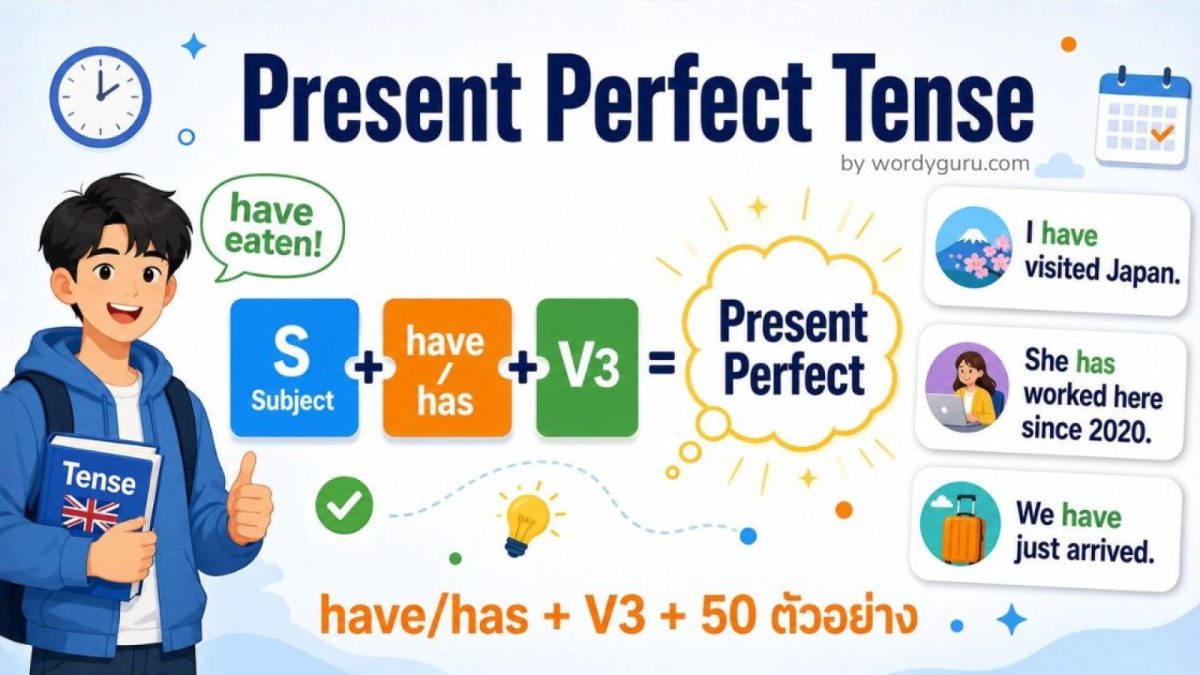
Present Perfect Tense + V3 โครงสร้าง การใช้ ตัวอย่าง 50 ประโยค [2026]
สรุปสั้น ๆ — Present Perfect คืออะไร
Present Perfect Tense คือ tense ที่ใช้พูดถึงเหตุการณ์ที่เริ่มในอดีตและยังเกี่ยวข้องกับปัจจุบัน โครงสร้างคือ:
- S + have/has + V3 — สำหรับประโยคบอกเล่า
- S + have/has + not + V3 — สำหรับปฏิเสธ (haven't / hasn't)
- Have/Has + S + V3? — สำหรับคำถาม
ใช้คู่กับ Time Markers เช่น since, for, already, yet, just, ever, never — และต้องไม่ใช้กับเวลาเฉพาะในอดีต (เช่น yesterday, last week)
- สรุปสั้น ๆ — Present Perfect คืออะไร
- A. โครงสร้าง 3 รูปประโยคของ Present Perfect
- B. 6 การใช้งานหลักของ Present Perfect
- Use 1: เหตุการณ์เริ่มในอดีต — ยังต่อเนื่องถึงปัจจุบัน (since / for)
- Use 2: เหตุการณ์ที่เพิ่งจบ — ผลยังคงอยู่ (just / already / recently)
- Use 3: ประสบการณ์ในชีวิต — ไม่เจาะจงเวลา (ever / never / before)
- Use 4: เหตุการณ์ที่เกิดซ้ำหลายครั้ง — จนถึงปัจจุบัน
- Use 5: ใช้กับ Superlative (the best / the first / the most)
- Use 6: ใช้กับ "This is the first/second/third time"
- C. 7 Time Markers ที่ใช้กับ Present Perfect
- D. 50 ตัวอย่างประโยค Present Perfect จากชีวิตจริง
- หมวด 1: ชีวิตประจำวัน (Daily Life) — 10 ประโยค
- หมวด 2: ที่ทำงาน / โรงเรียน (Work & School) — 10 ประโยค
- หมวด 3: การเดินทางและประสบการณ์ (Travel & Experience) — 10 ประโยค
- หมวด 4: ความสัมพันธ์และความรู้สึก (Relationships & Feelings) — 10 ประโยค
- หมวด 5: ความสำเร็จและสถิติ (Achievements & Records) — 5 ประโยค
- หมวด 6: ครั้งแรก (Firsts) — 5 ประโยค
- E. Present Perfect vs Past Simple — แยกให้ออกใน 30 วินาที
- 5 ข้อผิดพลาดที่พบบ่อยในการใช้ Present Perfect
- พร้อมฝึก Present Perfect แล้วหรือยัง?
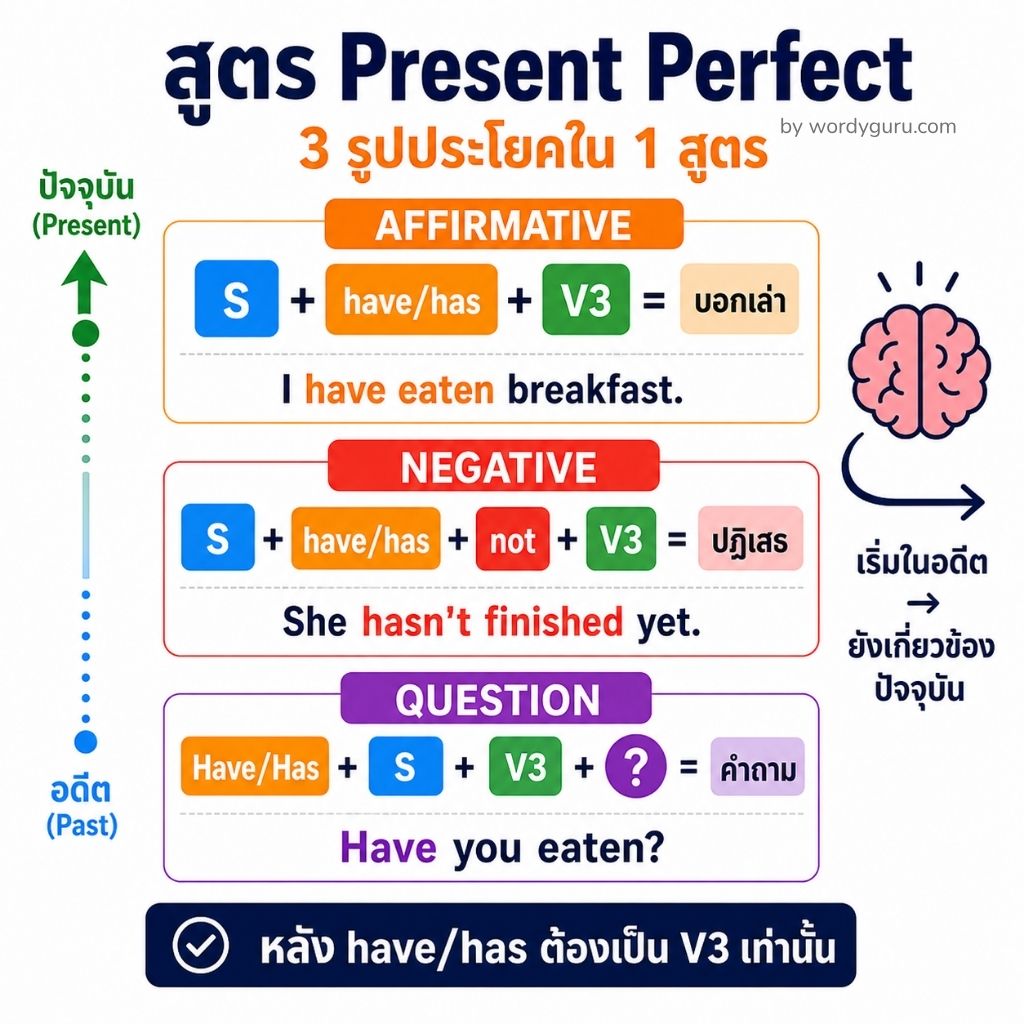
A. โครงสร้าง 3 รูปประโยคของ Present Perfect
Present Perfect มี 3 รูปแบบประโยค เหมือน tense อื่น ๆ — บอกเล่า ปฏิเสธ และคำถาม โดยใช้ have/has + V3 เป็นแกนกลาง
รูปบอกเล่า (Affirmative): S + have/has + V3
ใช้เมื่อต้องการบอกว่าเคยทำหรือทำสิ่งใดเสร็จสิ้นแล้ว
กฎการใช้ have / has
- I / You / We / They + have + V3 → "I have finished my homework."
- He / She / It + has + V3 → "She has lived here for 5 years."
- รูปย่อ: I've, You've, He's, She's, It's, We've, They've
ตัวอย่าง 5 ประโยค
- I have visited Japan three times. (เคยไปญี่ปุ่นมา 3 ครั้ง)
- She has worked here since 2020. (ทำงานที่นี่มาตั้งแต่ 2020)
- They have just arrived. (เพิ่งมาถึง)
- We have completed the project. (ทำโครงการเสร็จแล้ว)
- He has eaten Thai food before. (เคยกินอาหารไทยมาก่อน)
รูปปฏิเสธ (Negative): S + have/has + not + V3
ใช้เมื่อต้องการบอกว่ายังไม่เคยทำ หรือยังไม่ได้ทำ
โครงสร้างและรูปย่อ
- have not = haven't → "I haven't seen that movie."
- has not = hasn't → "He hasn't finished yet."
- คำที่ใช้ร่วม: not yet, never, not...for years
ตัวอย่าง 5 ประโยค
- I haven't been to Paris. (ยังไม่เคยไปปารีส)
- She hasn't replied to my email. (ยังไม่ตอบอีเมลฉัน)
- They haven't decided yet. (ยังไม่ตัดสินใจ)
- We haven't met for 10 years. (ไม่เจอกันมา 10 ปี)
- He hasn't called me back. (ยังไม่โทรกลับมาหาฉัน)
รูปคำถาม (Question): Have/Has + S + V3?
ใช้ถามเกี่ยวกับประสบการณ์ในอดีตหรือผลลัพธ์ในปัจจุบัน
2 ประเภทคำถาม
- Yes/No Questions: Have/Has + S + V3? → "Have you finished?"
- WH-Questions: WH + have/has + S + V3? → "How long have you worked here?"
- คำที่นิยมใช้: ever, yet, how long, how many times
ตัวอย่าง 5 ประโยค
- Have you ever visited Japan? (เคยไปญี่ปุ่นไหม?)
- Has she arrived yet? (เธอมาถึงแล้วหรือยัง?)
- How long have you known him? (รู้จักเขามานานแค่ไหน?)
- How many books have you read this year? (อ่านหนังสือกี่เล่มปีนี้?)
- What have you done? (ทำอะไรลงไป?)
สรุป โครงสร้าง 3 รูปจำง่าย
บอกเล่า: "I have eaten." (กินแล้ว)
ปฏิเสธ: "I haven't eaten." (ยังไม่กิน)
คำถาม: "Have you eaten?" (กินหรือยัง?)
จุดสำคัญ: ต้องตามด้วย V3 (Past Participle) เสมอ — ห้ามใช้ V1 หรือ V2 หลัง have/has
B. 6 การใช้งานหลักของ Present Perfect
Present Perfect ใช้ใน 6 สถานการณ์ที่ต่างกัน — แต่ทั้งหมดมีจุดร่วมคือ เชื่อมโยงอดีตกับปัจจุบัน
Use 1: เหตุการณ์เริ่มในอดีต — ยังต่อเนื่องถึงปัจจุบัน (since / for)
การกระทำที่เริ่มในอดีตและยังคงเกิดอยู่ตอนนี้
- I have lived in Bangkok for 10 years. (อาศัยที่กรุงเทพ 10 ปีแล้ว — ยังอยู่)
- She has worked here since 2020. (ทำงานที่นี่ตั้งแต่ 2020 — ยังทำอยู่)
- We have known each other for ages. (รู้จักกันมานาน — ยังรู้จัก)
Use 2: เหตุการณ์ที่เพิ่งจบ — ผลยังคงอยู่ (just / already / recently)
เหตุการณ์เพิ่งเกิด ผลยังเห็นอยู่ในปัจจุบัน
- She has just arrived. (เพิ่งมาถึง — ยังอยู่ที่นี่)
- I have already finished my work. (ทำเสร็จแล้ว — ตอนนี้ว่าง)
- The train has recently departed. (รถไฟเพิ่งออก — ตอนนี้ขึ้นไม่ได้)
Use 3: ประสบการณ์ในชีวิต — ไม่เจาะจงเวลา (ever / never / before)
การกระทำที่เคยทำในอดีตที่ไหนสักช่วง ไม่บอกชัดว่าเมื่อไร
- I have been to Japan twice. (เคยไปญี่ปุ่น 2 ครั้ง — ไม่ระบุเมื่อไร)
- She has never tried sushi. (ไม่เคยลอง sushi)
- Have you ever ridden a horse? (เคยขี่ม้าไหม?)
Use 4: เหตุการณ์ที่เกิดซ้ำหลายครั้ง — จนถึงปัจจุบัน
การกระทำที่เกิดซ้ำในช่วงเวลาที่ยังไม่จบ
- He has visited us 5 times this year. (มาเยี่ยม 5 ครั้งปีนี้ — ปียังไม่จบ)
- I have called her three times today. (โทรหาเธอ 3 ครั้งวันนี้ — วันยังไม่จบ)
- The team has won 4 matches this season. (ชนะ 4 นัดในซีซั่นนี้)
Use 5: ใช้กับ Superlative (the best / the first / the most)
บอกว่าเป็นสิ่งที่ดีที่สุด/แย่ที่สุดเท่าที่เคยพบ
- This is the best movie I have ever seen. (หนังที่ดีที่สุดที่เคยดู)
- It's the worst day I have ever had. (วันที่แย่ที่สุดที่เคยมี)
- She is the smartest person I have ever met. (คนที่ฉลาดที่สุดที่เคยเจอ)
Use 6: ใช้กับ "This is the first/second/third time"
บอกว่าเป็นครั้งแรก/ครั้งที่...ที่ทำสิ่งใด
- This is the first time I have eaten Thai food. (ครั้งแรกที่กินอาหารไทย)
- It's the second time she has visited us. (ครั้งที่ 2 ที่เธอมาเยี่ยม)
- This is the third time you have asked me. (ครั้งที่ 3 ที่ถามฉัน)
เคล็ดลับจำ 6 Use Cases
ทุก Use Case มีจุดร่วม: เชื่อมโยงอดีตกับปัจจุบัน — ถ้าประโยคไหน "ตัดขาดจากปัจจุบัน" (เช่น พูดถึงสิ่งที่จบแน่นอนในอดีต) ให้ใช้ Past Simple แทน
C. 7 Time Markers ที่ใช้กับ Present Perfect
Time Markers คือคำสำคัญที่บอกว่าต้องใช้ Present Perfect — เห็นคำเหล่านี้ในประโยค ตอบ Present Perfect ได้เกือบ 100%
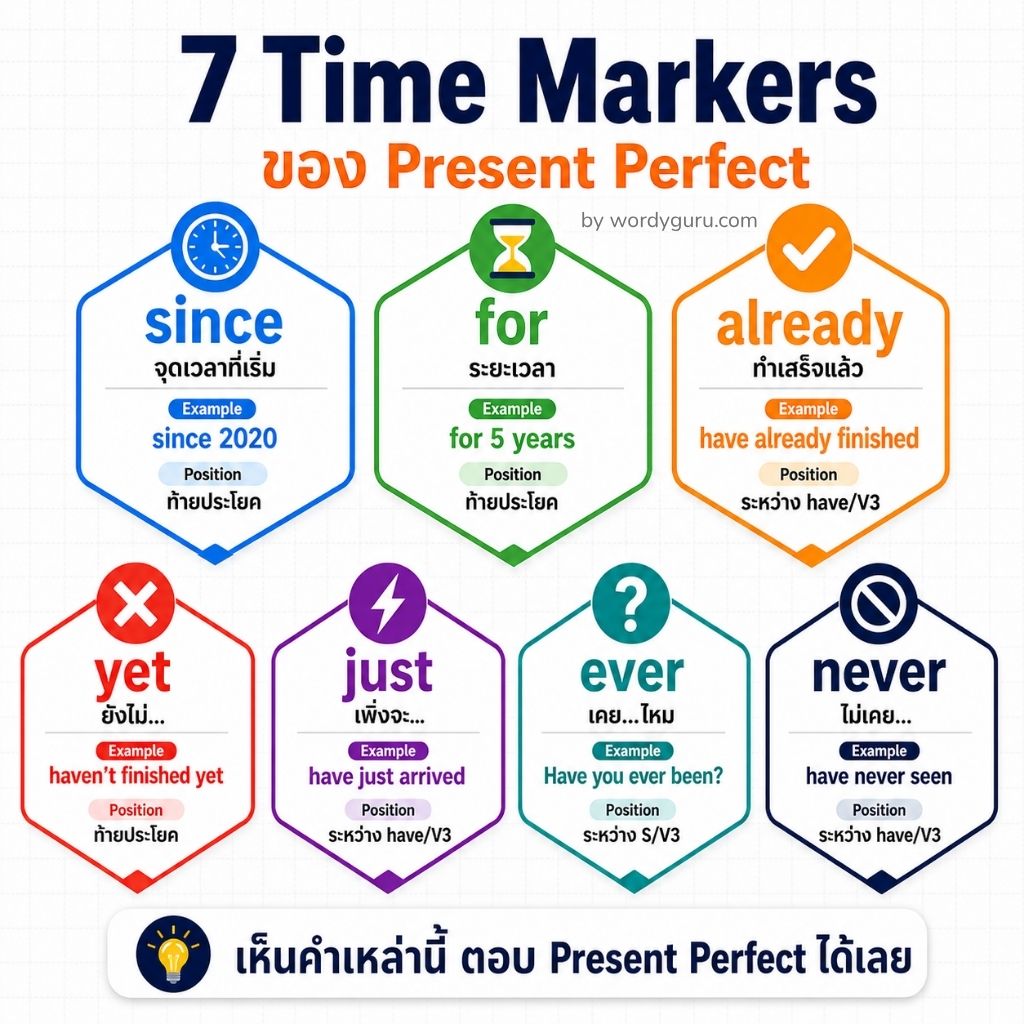
since — ใช้กับ "จุดเวลา" ที่เริ่ม
ใช้บอกตอนเริ่มของเหตุการณ์ที่ยังต่อเนื่อง — ตามด้วยปี / วัน / เดือน / เหตุการณ์
ตำแหน่ง: ท้ายประโยค (หลัง V3)
- I have lived here since 2018.
- She has worked at Google since last month.
- We have been friends since high school.
- He hasn't called since Monday.
- They have been together since they met.
for — ใช้กับ "ระยะเวลา"
ใช้บอกความยาวเวลาของเหตุการณ์ — ตามด้วยจำนวน + หน่วยเวลา
ตำแหน่ง: ท้ายประโยค (หลัง V3)
- I have lived here for 5 years.
- She has worked here for 6 months.
- We have known each other for a long time.
- He hasn't slept for 2 days.
- They have been married for 20 years.
already — ใช้บอก "ทำเสร็จแล้ว"
ใช้ในประโยคบอกเล่า เพื่อเน้นว่าทำเสร็จเร็วกว่าที่คิด
ตำแหน่ง: ระหว่าง have/has และ V3
- I have already finished my homework.
- She has already left the office.
- We have already seen this movie.
- The bus has already arrived.
- They have already moved to a new house.
yet — ใช้บอก "ยังไม่..." หรือ "...หรือยัง?"
ใช้ในประโยคปฏิเสธหรือคำถามเท่านั้น — ห้ามใช้ในบอกเล่า
ตำแหน่ง: ท้ายประโยค
- I haven't finished my work yet. (ปฏิเสธ)
- She hasn't called me yet. (ปฏิเสธ)
- Have you seen the new movie yet? (คำถาม)
- Has he arrived yet? (คำถาม)
- The package hasn't been delivered yet. (ปฏิเสธ)
just — ใช้บอก "เพิ่งจะ..."
ใช้บอกเหตุการณ์ที่เพิ่งเกิดขึ้นเมื่อไม่กี่วินาที/นาทีที่ผ่านมา
ตำแหน่ง: ระหว่าง have/has และ V3
- I have just finished eating. (เพิ่งกินเสร็จ)
- She has just left. (เพิ่งออกไป)
- We have just arrived. (เพิ่งมาถึง)
- The meeting has just started. (ประชุมเพิ่งเริ่ม)
- They have just moved in. (เพิ่งย้ายเข้ามา)
ever — ใช้ในคำถามเกี่ยวกับ "เคย..."
ใช้ถามเกี่ยวกับประสบการณ์ในอดีต — แปลว่า "เคย..."
ตำแหน่ง: ระหว่าง subject และ V3
- Have you ever been to Japan?
- Has she ever tried Thai food?
- Have they ever visited Europe?
- Have you ever seen a ghost?
- Has he ever ridden a horse?
never — ใช้บอก "ไม่เคย..."
ใช้ในประโยคบอกเล่า (แต่มีความหมายปฏิเสธ) — แปลว่า "ไม่เคย..."
ตำแหน่ง: ระหว่าง have/has และ V3
- I have never been to Paris.
- She has never tried sushi.
- We have never met before.
- He has never seen snow.
- They have never traveled abroad.
Bonus Markers — ใช้บ่อยรองลงมา
- so far / up to now = "จนถึงตอนนี้" → "We have completed 80% so far."
- recently / lately = "เมื่อเร็ว ๆ นี้" → "I have been busy recently."
- this week / this month / this year = "สัปดาห์นี้/เดือนนี้/ปีนี้" → "He has visited us 3 times this month."
- how long = "นานแค่ไหน" (คำถาม) → "How long have you lived here?"
D. 50 ตัวอย่างประโยค Present Perfect จากชีวิตจริง
รวม 50 ประโยคจริงที่ใช้ในชีวิตประจำวัน — แบ่งเป็น 6 หมวดตามสถานการณ์ที่พบบ่อย
หมวด 1: ชีวิตประจำวัน (Daily Life) — 10 ประโยค
| # | ประโยคอังกฤษ | ความหมายไทย |
|---|---|---|
| 1 | I have eaten breakfast already. | ฉันกินข้าวเช้าแล้ว |
| 2 | She has finished her homework. | เธอทำการบ้านเสร็จแล้ว |
| 3 | We have just woken up. | เราเพิ่งตื่นนอน |
| 4 | He has taken a shower. | เขาอาบน้ำแล้ว |
| 5 | They have brushed their teeth. | พวกเขาแปรงฟันแล้ว |
| 6 | I have lost my keys again. | ฉันทำกุญแจหายอีกแล้ว |
| 7 | The kids haven't slept yet. | เด็ก ๆ ยังไม่นอน |
| 8 | Mom has cooked dinner. | แม่ทำข้าวเย็นแล้ว |
| 9 | I have read 3 chapters today. | ฉันอ่าน 3 บทแล้ววันนี้ |
| 10 | She has drunk 2 cups of coffee. | เธอดื่มกาแฟไป 2 แก้วแล้ว |
หมวด 2: ที่ทำงาน / โรงเรียน (Work & School) — 10 ประโยค
| # | ประโยคอังกฤษ | ความหมายไทย |
|---|---|---|
| 11 | I have submitted the report. | ฉันส่งรายงานแล้ว |
| 12 | The boss has approved our project. | เจ้านายอนุมัติโครงการแล้ว |
| 13 | She has worked here for 5 years. | เธอทำงานที่นี่มา 5 ปีแล้ว |
| 14 | We have completed the training. | เราเรียนจบหลักสูตรแล้ว |
| 15 | The team has won the contract. | ทีมได้สัญญานี้แล้ว |
| 16 | I haven't received the email yet. | ฉันยังไม่ได้รับอีเมล |
| 17 | He has been promoted to manager. | เขาถูกเลื่อนเป็นผู้จัดการแล้ว |
| 18 | The class has started already. | ห้องเรียนเริ่มแล้ว |
| 19 | I have studied English for 10 years. | ฉันเรียนอังกฤษมา 10 ปี |
| 20 | Have you finished the assignment? | ทำการบ้านเสร็จไหม? |
หมวด 3: การเดินทางและประสบการณ์ (Travel & Experience) — 10 ประโยค
| # | ประโยคอังกฤษ | ความหมายไทย |
|---|---|---|
| 21 | I have visited Japan twice. | ฉันเคยไปญี่ปุ่น 2 ครั้ง |
| 22 | She has never been to Europe. | เธอไม่เคยไปยุโรป |
| 23 | Have you ever tried Korean BBQ? | เคยลองหมูย่างเกาหลีไหม? |
| 24 | We have traveled to 15 countries. | เราเดินทางไป 15 ประเทศแล้ว |
| 25 | I have just landed in Bangkok. | ฉันเพิ่งลงสนามบินกรุงเทพ |
| 26 | They have stayed at this hotel before. | พวกเขาเคยพักที่โรงแรมนี้มาก่อน |
| 27 | He has been to the beach already this year. | เขาไปทะเลแล้วปีนี้ |
| 28 | I have ridden a camel in Egypt. | ฉันเคยขี่อูฐที่อียิปต์ |
| 29 | She has flown first class many times. | เธอเคยบินชั้นเฟิร์สหลายครั้ง |
| 30 | We haven't seen snow in person. | เรายังไม่เคยเห็นหิมะของจริง |
หมวด 4: ความสัมพันธ์และความรู้สึก (Relationships & Feelings) — 10 ประโยค
| # | ประโยคอังกฤษ | ความหมายไทย |
|---|---|---|
| 31 | I have known him since childhood. | ฉันรู้จักเขาตั้งแต่เด็ก |
| 32 | We have been married for 10 years. | เราแต่งงานกันมา 10 ปี |
| 33 | She has loved him forever. | เธอรักเขามาตลอด |
| 34 | I have missed you so much. | ฉันคิดถึงคุณมาก |
| 35 | They have argued a lot recently. | พวกเขาทะเลาะกันบ่อยช่วงนี้ |
| 36 | He has changed a lot since college. | เขาเปลี่ยนไปเยอะตั้งแต่จบมหาลัย |
| 37 | I have always wanted to learn piano. | ฉันอยากเรียนเปียโนมาตลอด |
| 38 | We have grown apart over the years. | เราห่างกันไปตามเวลา |
| 39 | She has been very kind to me. | เธอใจดีกับฉันมาก |
| 40 | I haven't felt this happy in years. | ฉันไม่เคยมีความสุขแบบนี้มาเป็นปี |
หมวด 5: ความสำเร็จและสถิติ (Achievements & Records) — 5 ประโยค
| # | ประโยคอังกฤษ | ความหมายไทย |
|---|---|---|
| 41 | This is the best book I have ever read. | นี่คือหนังสือดีที่สุดที่เคยอ่าน |
| 42 | She has won 3 gold medals. | เธอได้เหรียญทอง 3 เหรียญแล้ว |
| 43 | The company has grown 200% this year. | บริษัทโตขึ้น 200% ปีนี้ |
| 44 | He has broken the world record. | เขาทำลายสถิติโลกแล้ว |
| 45 | We have raised $1 million for charity. | เราระดมทุน $1 ล้านสำหรับการกุศล |
หมวด 6: ครั้งแรก (Firsts) — 5 ประโยค
| # | ประโยคอังกฤษ | ความหมายไทย |
|---|---|---|
| 46 | This is the first time I have flown alone. | นี่เป็นครั้งแรกที่บินคนเดียว |
| 47 | It's the second time she has visited us. | นี่ครั้งที่ 2 ที่เธอมาเยี่ยม |
| 48 | This is the first time we have eaten sushi. | ครั้งแรกที่กิน sushi |
| 49 | It's the third time he has called today. | ครั้งที่ 3 ที่เขาโทรมาวันนี้ |
| 50 | This is the first time I have skipped class. | ครั้งแรกที่โดดเรียน |
วิธีฝึก 50 ประโยคให้จำได้
1. เลือก 5 ประโยคที่ใช้บ่อยในชีวิต → ท่องวันละ 10 นาที
2. แทนคำในประโยคเป็นคำของตัวเอง เช่น "I have eaten pizza" → "I have eaten som tum"
3. พูดออกเสียง 3 ครั้ง — เช้า กลางวัน เย็น
4. ใช้จริงในแชต Twitter/Instagram caption ภาษาอังกฤษ
5. ดูเทคนิคเพิ่มที่ 15 เทคนิคจำกริยา 3 ช่อง
E. Present Perfect vs Past Simple — แยกให้ออกใน 30 วินาที

เป็นเรื่องที่นักเรียนสับสนมากที่สุด — เพราะทั้งคู่พูดถึงอดีต แต่ใช้ต่างกันชัดเจน
| เกณฑ์ | Present Perfect | Past Simple |
|---|---|---|
| โครงสร้าง | have/has + V3 | V2 (Past form) |
| เวลาเฉพาะ | ไม่ระบุชัด | ระบุชัด (yesterday, last week) |
| เกี่ยวกับปัจจุบัน | เกี่ยวข้อง / ผลยังอยู่ | จบแล้ว / ตัดขาด |
| Time Markers | since, for, already, yet, just, ever, never | yesterday, last week, ago, in 2020 |
| คำถามใช้ | How long? Have you ever? | When? What time? What did? |
เปรียบเทียบประโยคจริง 5 คู่
คู่ 1: ทำงาน
- Present Perfect: I have worked here for 5 years. (ยังทำงานอยู่)
- Past Simple: I worked there for 5 years. (จบแล้ว ไม่ทำต่อ)
คู่ 2: เห็นหนัง
- Present Perfect: I have seen that movie. (เคยดู ไม่ระบุเมื่อไร)
- Past Simple: I saw that movie last night. (ดูเมื่อคืน — ระบุเวลา)
คู่ 3: ไปต่างประเทศ
- Present Perfect: She has been to Japan twice. (เคยไป — ประสบการณ์)
- Past Simple: She went to Japan in 2023. (ไปปี 2023 — ระบุเวลา)
คู่ 4: กินอาหาร
- Present Perfect: We have just eaten. (เพิ่งกิน — ผลยังอยู่ คืออิ่ม)
- Past Simple: We ate at noon. (กินเที่ยง — เวลาผ่านไปแล้ว)
คู่ 5: เรียน
- Present Perfect: I have studied English for 10 years. (ยังเรียนอยู่)
- Past Simple: I studied English at university. (จบไปแล้ว)
เทคนิคแยกใน 3 วินาที
ถามตัวเองว่า: "ประโยคนี้มีเวลาเฉพาะในอดีตไหม?"
✓ มี (yesterday, last week, ago, in 2020) → Past Simple (V2)
✗ ไม่มี / มี since/for/already/yet/just → Present Perfect (have/has + V3)
5 ข้อผิดพลาดที่พบบ่อยในการใช้ Present Perfect
ผิด: ใช้ Present Perfect กับเวลาเฉพาะในอดีต
ผิด: I have eaten breakfast yesterday.
ถูก: I ate breakfast yesterday. (ใช้ Past Simple — เพราะมี yesterday)
วิธีจำ: Present Perfect ห้ามใช้กับ yesterday, last week, in 2020, ago
ผิด: ใช้ V2 หลัง have/has แทน V3
ผิด: She has went to Japan.
ถูก: She has gone to Japan. (V3 = gone)
วิธีจำ: หลัง have/has/had ต้องใช้ V3 เท่านั้น (gone, seen, taken, eaten)
ผิด: ใช้ have กับ He/She/It แทน has
ผิด: He have finished his work.
ถูก: He has finished his work.
วิธีจำ: He/She/It → has; I/You/We/They → have
ผิด: วาง already/yet/just ผิดตำแหน่ง
ผิด: I have finished already my homework.
ถูก: I have already finished my homework. (already วางหลัง have/has)
วิธีจำ: already/just/never → ระหว่าง have/has และ V3 | yet → ท้ายประโยค
ผิด: สลับ since กับ for
ผิด: I have lived here for 2020.
ถูก: I have lived here since 2020. (since + จุดเวลา)
หรือ I have lived here for 5 years. (for + ระยะเวลา)
วิธีจำ: since = ตอนเริ่ม (2020, Monday, last year) | for = ระยะเวลา (5 years, 3 months)